 English (UK)
 Русский
 Español
 Dansk
Dansk
Chapter 1
The rhythmic clatter of the TGV was a comforting sound. It meant I was going somewhere, and right now, anywhere was better than Paris. I wasn’t running from anything dramatic, just the usual buildup of city grime and other people’s expectations.
Fields blurred past the window, a green and brown smudge. I was supposed to be thinking about my next project, but my mind was blissfully empty. That’s the whole point of a vacation, isn’t it? To stop thinking.
My datapad pinged. A message from Kenneth. “Check this out. You won’t believe it.” Followed by a link. Kenneth had a talent for finding the weirdest stuff and presenting it as gospel.
I sighed, a little amused, and tapped the link. It led to an article on the New Scientific Frontiers website. The headline was a mouthful: “Frame Weaver: Can a New Theory of Information Unlock Multidimensional Time Management?” The image underneath was a swirl of nested geometric shapes that looked like a kaleidoscope had a baby with a black hole.
I scrolled down. The article talked about dimensions and how the math in our heads might be the same math that holds the universe together. A researcher, Dr. Anya Sharma, claimed it wasn’t just about how we see things, but that the way we see things actually changes things. They’d found a connection between the patterns we use to make sense of our day and the patterns scientists use to describe other dimensions. Like a shared language.
Then it got practical. They were building a device called the ‘Chronos Frame’. It used sound to tune your mind, to help you focus, to make time feel different. People who tried it said they got more done and felt less rushed.
Of course, not everyone believed it. Some called it nonsense. Others said it was dangerous.
I stared at the screen, the train’s rhythm fading into the background. My life had been feeling like a mess lately. Too many things, all happening at once. The idea that I could just… reframe it. That I could tune my mind like a radio until the static cleared up. It was a scary thought. And a good one.
I looked outside. The world kept moving past, never stopping. Maybe I didn’t need a new start in Barcelona. Maybe I just needed a new way to see what was already here.
I typed a reply to Kenneth. Tell me everything.
Kenneth’s response was immediate. “They’re the real deal. Anya’s a rock star in that world. And get this – they’re presenting at some symposium in Barcelona next week. Quantum something-or-other. Small world, huh?”
It felt a little too convenient, like the universe was setting up a joke and I was the punchline. “Seriously?” I wrote back. “Send me the link.”
The Quantum Information & Chronobiology Symposium. My knowledge of science was rusty. I’d done physics and math in high school, even some code, before art school seduced me away. But I could sure follow along. The registration was still open.
Chapter 2
The train slid into Barcelona Sants. The air here was different—warm, smelling of diesel and the sea. I got a cab and gave the address for Baccardi Apartments, a place I’d found years ago. Quiet, in the middle of everything, with balconies that look out over Plaza Real.
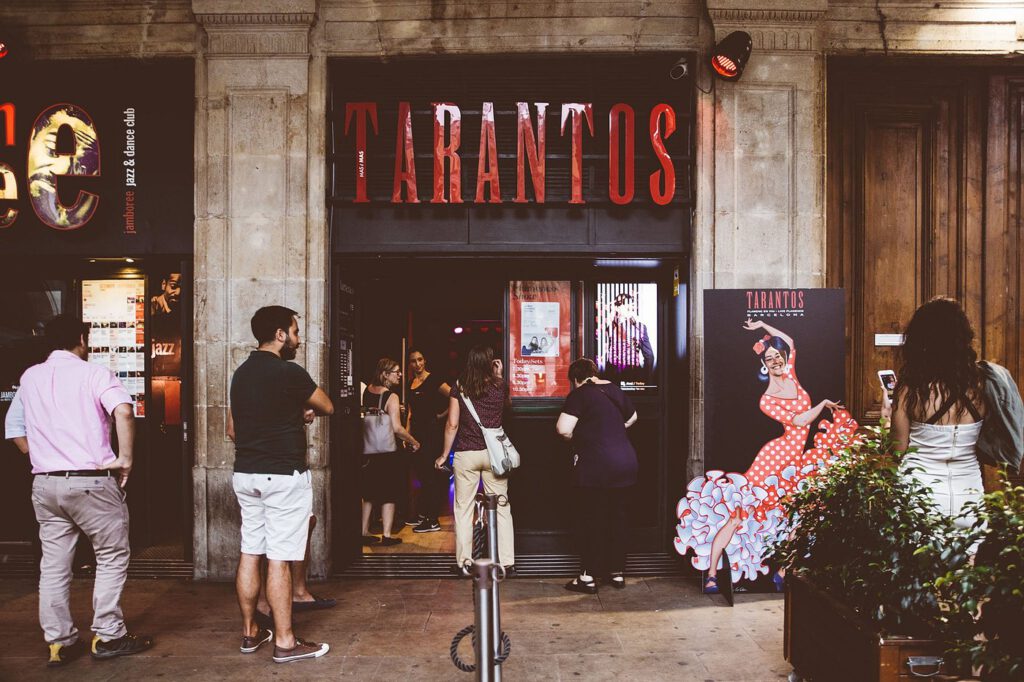
I got my key, left my bag in the room, and stepped out onto the balcony. Just a few steps away, right in front of Los Tarantos, a girl in a white dress rhythmically clapped her hands and moved gracefully to her own beat. The plaza was a living thing below me. Beside every single arch of the rectangular square—and the square is quite big if you know it—stood a large parasol shading restaurant tables. The fountain in the middle wasn’t working, and for some reason it never has been, any of the times I’ve been here before. It was just a sitting bench and a symbol of the center. Las palmeras finish the perfect, squarely landscape of the place.
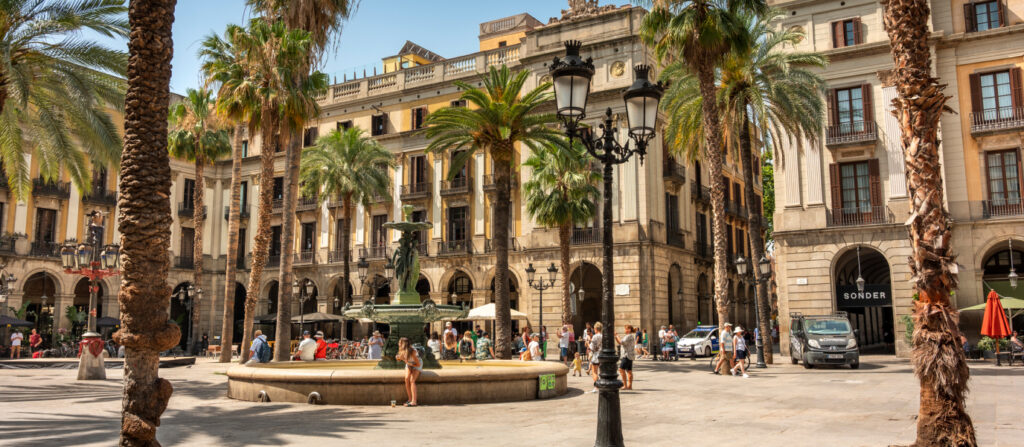
I changed and went back down, to the Tablao Flamenco beneath. It’s a dark cave of a place where people go to have their spirits beautifully reordered, with shows every hour from half past five, every single day of the week.
I found a seat close to the front, ordered a 0.33 of San Miguel, and looked around. The show started in half an hour and the place was nearly empty. Then people started to come in, and I was curious about them. When the lights went down, the whole crew appeared on stage, majestically dressed flamenco-style.
The guitar sounded decisive, sharp and clean. The singer’s voice was a raw thing, torn from a place deeper than lungs. Then the dancer’s heels hit the floor, not like gunshots, but like a sudden, furious heartbeat.
For a while, I forgot it all. The frames, the theory, the need to fix my life. The distinct music, the assertive dance, the beautiful sadness of the song left no room for anything else. It was the opposite of control. It was pure feeling.
The repertoire varied from the saddest Seguiriya to the most joyful Alegria, with energetic Tangos in between. It was good to be there, to share the space with the artists and strangers. I smiled around and tapped the rhythm when I felt excited.
When it ended, I walked back out into the night. The air was very warm. A spark was still there, a low hum under my skin. I didn’t know what the symposium would bring. For now, feeling the feeling of me was enough.
Chapter 3
Here it was, the glass-and-steel conference center, a world away from the old city. I passed through the rotating doors into a blast of cold air. The hall was full of people engaged in calm conversations, and many of them looked alike: they knew exactly what an equation was for.
I got my badge. The first session was called “Theoretical Foundations of Spacetime Harmonics and Frame Resonance.” I found a seat in the back.
An upbeat-looking man, Professor Seroff, started talking. He showed pictures of swirling colors, diagrams that looked like beehives. He talked about the universe as a thing that vibrates. That everything—every thought, every atom—is a note in a song.
It was like listening to a language I almost knew. I didn’t understand everything, but I felt the shape of it. The idea was this: reality isn’t fixed. It’s soft. And the way we think, the frames we use, might be like tuning forks. They can change the vibration of things. But only if you’re far from equilibrium, far from fixed in a definite state with all wave functions collapsed. Only in the chaos was one free to choose.
During the break, I stood by the coffee spot and listened. People talked about quantum this and entanglement that. For me, it was all noise. I just kept thinking about the softness of things.
The afternoon was about the machine. Dr. Tanaka from the Zurich group presented it. He was young, looked like he hadn’t slept in a week, but his eyes were bright.
“We’re not there yet,” he said. “But we’ve built something.” He showed a picture of a headset. Sleek, white. “The Chronos Frame. It uses sound, magnetic fields… a gentle push. To help your brain find a new rhythm. A more… coherent one.”
He was careful. He said it didn’t work for everyone. He said they were being careful. But the feeling in the room shifted. This wasn’t just theory anymore. This was a thing you could touch.
Then he said they were looking for volunteers to try it, a limited number, during the conference.
I wanted to volunteer to feel what it pushed—or maybe because I didn’t quite believe it could shift or change anything.
During the next break, I found an old church and a garden tucked beside the conference center. Quiet… I sat on a bench, away from the noise. A fountain babbled, small birds sang, and water flowed steadily down a stone sculpture right before my eyes. Greenery and tranquility enveloped the space.
The Chronos Frame, then…. he said it was personal. That it could help you find your own rhythm. Your own time. The thought stuck with me. What if it wasn’t about doing more, but about doing what actually matters to you? Someone who wants a slow life could use it to protect that slowness. Someone stuck in their own head could use it to finally act…
It was about alignment, not control—tuning yourself until your life finally felt like your own. It was about seeing the consequences of your choices, and about making the path so visible you could finally see what was possible. Maybe even choose which consequences you wanted.
That was the quiet brilliance of it – that it promised a choice.
Chapter 4
A knock on the door woke me. The room was pitch black. “Wake up or you’ll miss breakfast,” a voice said from the other side.
“Okay,” I mumbled into the pillow. I tried to remember where I was. My hand found the phone on the bedside table. The light from the screen showed me the window. I pushed the persiana up.
Hotel room. The last clear thing I remembered was the conference. The cool touch of electrodes on my skin, the weird weight of something in my hair.
I felt fine. My clothes on a chair. My bag in the corner. Everything seemed normal, except for the hollow feeling in my chest. At least it wasn’t a hospital. I took a breath. My mind was clear, the morning felt like any other in a new place. Just a blank space after the machine…
Down in the lobby, the receptionist looked up. She had a kind face.
“Um… Everything okay? I’m having trouble remembering how I got here.”
“Very quiet,” she said. “Not my shift yesterday, but the system shows you checked in yourself. Maybe a little tired?” She smiled.
I asked where we were.
“Hotel Marina. Malgrat de Mar.”
Malgrat de Mar. How nice. She didn’t even look puzzled.
After breakfast—a dry croissant, bad coffee—I went back to my room. Checked my phone. A message from my mum. A question from Kenneth. Some group notifications. Nothing strange.
Then I remembered something. I have been at this hotel many years ago, but in a different type of room. There, a thought came to me as if through the balcony door: “Some time in the not-so-distant future, I wish for a peaceful family life. Two kids. Yes, two kids—they could be two boys. Please. I would be so very glad, even with two boys”.
I changed into my swimsuit, humming my father’s old refrain: ‘no te olvides de toalla cuando vayas a la playa’. Going to the beach was the only thing that made sense. I walked straight into the water. The cold water was a shock, but then, I could just be me in the sea.
Chapter 5
The waves lapped gently against the shore. I found a secluded spot on the beach, away from the throngs of tourists, and sat down, digging my toes into the warm sand. I picked up a handful of pebbles, smooth and worn by the sea, and began to arrange them in patterns on the sand.
The sun warmed my skin, the sea breeze caressed my face, and for a few precious moments, I felt a sense of peace, a sense of connection to the ancient nature of the place. Time seemed to slow down, stretching out into an infinite present.
After a while, I felt like I hadn’t eaten anything substantial since the bland hotel breakfast. I found a restaurant along the coast, one with a terrace overlooking the Mediterranean. I ordered a paella de marisco, and then instinctively reached for my phone, only to realize that I had left it on the windowsill of my hotel room.
After a moment’s hesitation, I decided to leave the phone where it was and proceed disconnected. Or rather, connected to something better.
The paella arrived, a steaming mountain of saffron-infused rice, studded with mussels, clams, prawns, and calamari. The aroma was intoxicating. I took a bite, and a wave of flavor washed over me. While eating, I watched the children playing in the water, their laughter echoing across the beach. I observed the seagulls circling overhead, their cries piercing the air. I adore seagulls – many people do not like them, but I do, much, since a summer in Cornwall…
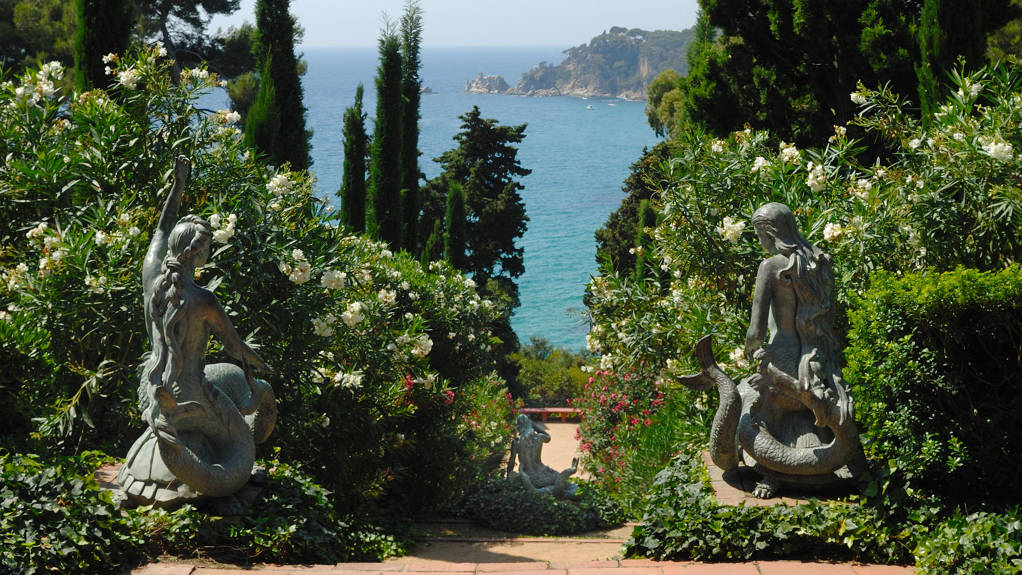
After finishing the paella, I decided to explore a picturesque clifftop garden located a short distance from the restaurant. It was a labyrinth of terraces, fountains, and sculptures, all meticulously manicured and framed by breathtaking views of the coastline.
As I wandered through the pathways, admiring the lush vegetation and the stunning vistas, I struck up a conversation with a couple sitting on a bench overlooking the sea. They introduced themselves as Claus and Flora. Claus, a jovial man with a twinkle in his eye, worked as a researcher of Chinese culture at a university in the north of Europe. Flora, his wife, was an artist, her face radiating warmth and intelligence. They were on vacation in Lloret de Mar.
I hesitated for a moment, then decided to share my experience with them, recounting my participation in the Chronos Frame experiment and the strange events that had followed.
Claus listened intently, his expression thoughtful. When I finished, he smiled and said, “My friend, in all the annals of history, there are stories far weirder than yours. The universe is full of mysteries.” He then launched into a story about the Zanetti train, a train that supposedly disappeared with 102 passengers between Rome and Rio in the early 20th century. “The curious part,” Claus added, leaning in, “is that decades earlier, a group of 102 Italians appeared in Mexico, utterly disoriented. They were committed to a psychiatric ward because they claimed to have come from the future—from the very 20th century the train vanished in.”
Flora, who had been listening with a quiet intensity, now spoke. “If you force your eyes to adjust from complete darkness to a blinding light, you see nothing at first. Probably you needed a good night’s sleep to calibrate.” She gave a knowing look. “The machine surely didn’t harm you. It just overloaded the sensor. And in doing so, it might have… cracked the lens open a little wider. You might be seeing a different spectrum of reality now.”
Their words were strangely comforting. They didn’t dismiss me as crazy or delusional. My experience was inexplicable, yet they had placed it within a larger context—one that stretched across both time and the world. It made me feel less alone, and less like I was losing my mind.
Chapter 6
The next morning, I went straight to the balcony. The silk of my robe felt cool. The wind moved through the pine trees. The sea was a flat, blue sheet. I felt calm. A deep, unusual quiet.
Then I went to the bathroom. I was looking at myself in the mirror, and a thought arrived. Not a thought—a sentence. In my own voice, clear and solid, inside my head.
I am in need of a lot of healing, and if I continue to negate it, I will continue to stagnate.
I stared. My face looked back, blank. The words hung there, heavy and true. I didn’t know where they came from. I flushed the toilet, washing them away with the sound of water, and went down for breakfast.
The dining room was bright. Families, couples, people alone. A young Chinese woman sat by the window, focused on her laptop. She wasn’t pretty in a classic way, but there was a clarity to her, a freshness. On the cover of her laptop was a large sticker, facing out. It said:
I ONLY WANT TO DRINK COFFEE, CREATE STUFF AND SLEEP
I smiled. It felt honest.
The breakfast was vegan today. Fake cheese, fake sausages, instant coffee. I took some anyway.
I felt placid. Neutral. I carried my plate to the inner courtyard and sat in the grass near a flowering bush. The shade was cool. I wasn’t thinking about yesterday or tomorrow. I was just there. Feeling the grass under my hands, smelling the flowers. Weightless. Thoughtless. Only vaguely wondering what had been done to me.
Chapter 7
This time, I had my phone with me. Its ringtone cut through the quiet of the courtyard, sharp and out of place.
“Allô?”
“They’re taking pictures of the floor!” It was Mateo, my atelier mate, his voice a tense whisper.
Just like that, I was back. The real world, as they call it… Today was the day of the new landlord’s visit to the ateljé, the sprawling space where Mateo and I both lived and worked. The new landlord, a slick, predatory type, was eager to clear the building of its former tenants, seizing upon any possible reason to evict us. I wanted to stay. Mateo thought we should just go.
I’d been evicted before and knew how to leave. But this time, I couldn’t. The atelier held our collective productions—a life assembled, not just lived. Costumes, books, tools, paints, fabrics, half-finished sculptures, vintage instruments, all sorts of random souvenirs, every object a tangible artifact of the unique and unconventional life we had created together. If I could take a train to Barcelona on a whim, all these things couldn’t.
“Just stay calm,” I said. “We’ll figure it out.”
The floor they were photographing was, needless to say, a masterpiece of unintentional art. Years of spilled paint, splattered resin, dripped varnish, and errant glitter had transformed the wooden planks into a vibrant, multi-layered tapestry of color and texture. It was a visual record of our creative process, a testament to our chaotic and unconventional lifestyle.
We paid a ridiculously low rent, practically a gift. On the other hand, the new landlord had acquired the building at auction for a mere 10,000 euros, an equally ridiculous price that was practically a steal. Unfortunately, we couldn’t afford to buy it ourselves. The good news was that our time-unlimited contract with the previous owner prevented the new landlord from legally raising the rent beyond the yearly inflation rate. I thought we were safe, protected by the letter of the law. Mateo, however, remained convinced that we were in imminent danger, vulnerable to the whims of a ruthless capitalist. Now, apparently, they were trying to complain to the authorities that we were mishandling the floor, damaging the property, violating some obscure building code. Let them try.
I hung up the phone and gazed up at the sky. The cloudless expanse of blue seemed to mock my anxieties, reminding me of the vastness of the universe and the insignificance of my own petty concerns. But the creeping feeling that not everything was quite right, that something was lurking beneath the surface of my seemingly placid existence, had completely spoiled my mood. I wasn’t weightless anymore.
I stood up. You can’t just be in this world, I thought. Sometimes, you have to fight.
Chapter 8
Taking action in that particular situation could only mean doing something with my internal landscape. I couldn’t fly back to Paris and dismantle the landlord’s plans. I could try to ignore them, wait for their next move, and react. Or… I could apply a kind of internal magic wand and change my perception. In the end, both were forms of waiting, but the first meant drowning in anxiety, while the second felt like swimming—an active, if internal, choice.
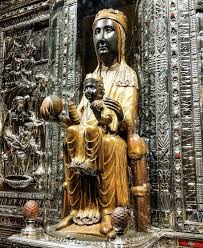
I checked out of the hotel and took the train and funicular to Montserrat. A few years ago, I’d felt a kind of electrical discharge from La Moreneta that had worked wonders on my nervous system. I had sat for an hour in the chapel behind her, looking at her back, utterly bewildered. Maybe I was counting on a similar miracle this time.
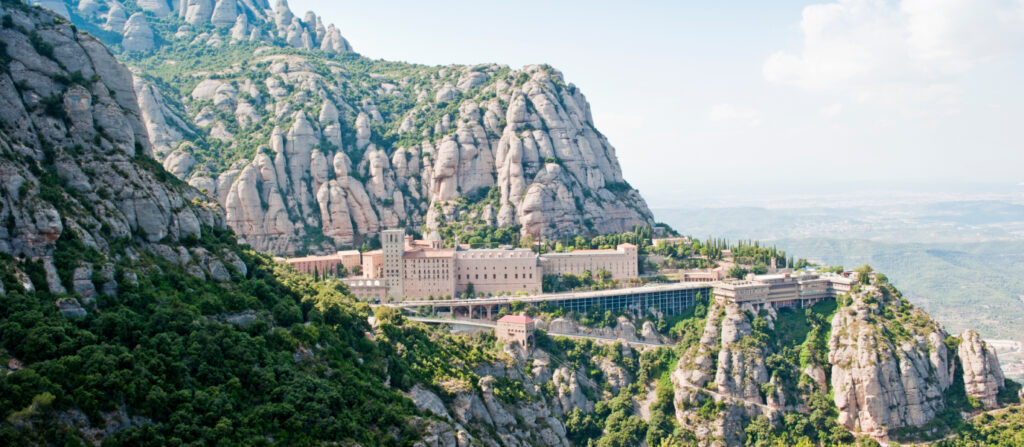
I stepped out of the funicular into the familiar, sweet air of Montserrat. The views were, of course, more than magnificent—grand, steeped in history and grandeur. But I tuned out the guidebook descriptions in my head.
I went straight to the queue for the Virgin. No physical effect this time. La Moreneta stood there, dark and small, looking right through me. I said my prayers anyway. I am not even a Christian in the strict sense. I just have a reverence for deep-rooted traditions, and I recognize that sometimes mystical things can happen in these places of power. Like… cracks open in spots like this. Physics or faith, it doesn’t really matter. Something happens.
A complete absence of any mystical feeling was a disappointment.
I went to the famous, abundant buffet, known for its fish and wine. Sadly, getting drunk wasn’t part of my plan, or else I could have benefited very well from the wine included in the price.
Suddenly, I felt lonely. I imagined what a rich experience it would be to share this moment with people dear to my heart. It would have compensated for the lack of a mystical experience in the cathedral.
I went back there. The monks had already started their recital. Poor automatons, I thought, not unkindly, as I walked back out to the square. Magnificent views… a warm wind… tourists.
The plan had worked, somehow. But it was option number one: I had managed to forget about the problem.
Chapter 9
That evening, I had nowhere in particular to be. I went to the hostel, only to find it was full. They suggested the hotel a good walk down the serpentine road, but I decided to try the pilgrim’s lodging on the other side of the square. As if an answer to my prayers, luck was with me—a cancellation had opened a single room for the next four nights, and it was three times cheaper than the tourist hostel.
I was given a small, solitary apartment. Everything you need, and nothing you don’t. No television, no sofa. Just a bed, a desk, a bathroom. Perfect. I don’t watch TV, and I’d rather have a desk for writing or drawing than a couch for lounging. The place was meant for prayer, reflection—a stop on the Catalan Way or the path of St. Ignatius. Or, perhaps, a leap forward on someone’s spiritual journey.
I dropped onto the bed and lay there for a long time, just looking out the window. My room was on the ground floor, looking out toward the rugged peaks and the monastery’s architecture. A large acacia tree stood just outside, its leaves dancing in the wind. The day’s tourists had vanished, and I could clearly hear the silence.
My mind was quiet, almost blank. I tried to focus on what I wanted, what needed doing. I was faintly aware of the atelier—packed with the artifacts of my life, a museum of everything I’d made and been. And then there was the Chronos Frame. It had done something, shifted something… but not in the way I’d expected. Or had it? Was “better time management” really just about learning to stop thinking unnecessary thoughts?
Suddenly, I stood up. I went to my jacket hanging by the door and reached into the inner pocket. My fingers found a stiff white card. Eva Rossi, Neuróloga, Barcelona. I didn’t remember taking it or putting it there. But my unconscious had held onto it. The moment I formed the thought, my body knew what to do.
I dialed the number. A recorded voice answered. I left a message, asking for an appointment within the next three days. I might need to go back to Paris soon if they kept harassing Mateo.
When it came time to leave my name, something shifted in my mind. I didn’t give my real one. “Denni Salgado,” I said. The name felt neutral, unmarked. A shield. Salgado is my father’s family name, while I only have my mum’s.
Things were moving. Maybe not on the surface, but underneath. I felt like I’d stepped onto another lifeline—one with new stories, new creations, new ways of seeing. Maybe even a new economic reality where the cost of the atelier wouldn’t matter. But holding onto it was a matter of principle. It was a space built by artists, for artists. A place meant to be lived in, not profited from. I wouldn’t hand it over to someone else’s greed. It made no sense to let the space be used by others to feed the mindless ambitions of someone who’d simply inherited a fat purse.
Night had fallen. I stepped outside and was immediately wrapped in the magic stillness of Montserrat after dark. The air was cool and clear. The sky felt enormous. It opened my senses; my chest felt deeper. I could breathe the air of greatness. Somehow I was a part of it, somehow I was great, too, and my matters mattered.
When I returned to my cell and lay down on the narrow bed, I felt different. Lighter. Everything was going to work out for us.
Chapter 10
That night, contrary to my hopes, I didn’t sleep well. What made it different from other restless nights was the absence of the usual anxious spiral of thoughts that usually keeps me awake. This time, I fell asleep easily each time, but I kept waking up—seven or eight times—before I finally gave up and went down to the plaza for coffee. The bells had already rung for morning prayers.
The tourists hadn’t arrived en masse yet, but the food shop was busy with early risers. I felt a strange kinship with them—pilgrims, backpackers, people who had come here looking for something. A miracle, maybe, or just a moment of quiet. It was a different crowd than I was used to. Sitting in the plaza cradling my cortado, I finally remembered to switch on my phone. It’s funny—you can’t really forget your phone anymore. No one can. Not even kids. When did that happen?
A voicemail blinked, from a number I recognized as the neurological clinic. Eva had a free slot, in the morning, precisely three days hence.
The place was beginning to awaken. The sun warmed the stones around me, and it was beginning to feel cozy. The low murmur of conversations mixed with the gentle shushing of leaves in the wind, set against the majestic backdrop of the jagged, rocky slopes: it was an ordinary, yet profoundly surreal scene.
I remembered again where I was—what this place means. To Catalans, this isn’t just a church. It’s a living sanctuary. The land itself is sacred. The rocks, the paths, the air.
I thought about the old printing presses here that once produced beautiful works in Catalan when the language was suppressed. I thought about the stubborn, brave minds that refused to become simply “Spanish.” The artists who painted the Mother and Child—a figure of life and tenderness—instead of focusing only on the crucifixion. It made me wonder… why crucifixion and not the resurrection in churches? why do so many cathedrals emphasize death and suffering instead of resurrection? Why the cross and not the empty tomb, if it is the resurrection and not the crucifixion that matters?
The sun climbed higher. The light felt clean. I finished my coffee. The day stretched ahead, full of time. And again, that felt like a gift.
Chapter 11
Nevertheless, at some point during the day I began to feel a deep loneliness on this vacation, a sense that something essential was missing, or that I was out of sync with reality. The mental “reset” from the experiment was a gift, but I was starting to worry about the cost. I remembered the movie Memento—how the main character couldn’t form new memories, living in a perpetual, manipulated present. Just like him, I couldn’t seem to put my brains together, though it manifested in a more subtle way. I was generating all sorts of brilliant ideas and revelations, only to have them vanish from my mind by the next day, or even the next hour. My inner landscape was like a magical, shifting field where oases of profound vision popped up, only to fade away again, leaving behind nothing but a shimmering mirage. I needed a new technique for living my life with my new wiring…or to put the old wiring back in place. Which I didn’t quite want. There was a huge advantage in not worrying about things. Being without worry for one day is like being immortal for one day, as a fellow traveler to Beijing had told me once, after finding the secret to leave everything behind and living in the moment. “Only today is today“, he also said.
Then my phone rang. I was so stupid that I answered immediately, without checking the number. A woman’s voice, high and hurried, explained that my flatmate in Paris had told her I was at Montserrat. She was here too, she said, stranded without money, waiting for a transfer that hadn’t come. Could we meet? I felt a surge of unease, a subtle but unmistakable prickling of my senses.
We met in the plaza, and she immediately started eating my ears off, monopolizing the conversation with a torrent of complaints about her situation, her bad luck, and how the digital money often leave people unable to pay so that they have to go begging around. She spoke about our everyday realities like facial recognition, voice detection, 24/7 closed-circuit TV cameras, algorithmic manipulation, cell phone and location tracking, digital eavesdropping via smart devices, and the smart grid. As if these
technologies were merely surveillance tools, and not tools for safety,
convenience, education, and profit.
Those topics were not relevant for me, and even less in Montserrat. I tried to politely disengage, but she was relentlessly persistent, clinging to me like a limpet. And besides, it was rude to leave her alone to her fate. Against my better judgment, I decided to let her stay in my “cell” for the night, her sleeping bag sprawled out in the tiny kitchenette.
I lay awake, utterly drained. The next morning, I bought her groceries—bread, cheese, fruit—anything to make her go away. Then I fled. I spent the day wandering other towns, anywhere but Montserrat, anywhere I wouldn’t see or hear her.
By evening, I returned on the last train. The mountain was quiet again, empty of tourists, and everything bathed in the soft moonlight. The air was cool and still. I half-expected to find her waiting at my door, but the cell was locked and silent. It was as if nothing had happened. Relief washed over me. I walked around, bewitched by the views and feeling of the place. There was a profound sense of stillness, a feeling of ancient power. I could breathe with the place, and again, I was part of it.
I went for a walk through the monastery grounds under the stars, feeling the strange magic of this place—both its beauty and its subtle danger. That girl had been like a psychic vampire, twisting the energy around her to suit her needs. But now she was gone.
That night, I slept very well and very long, completely exhausted. When I woke up the next morning, it seemed as though I had forgotten everything “I” had wanted to do, what I meant, and what I would do after this vacation.
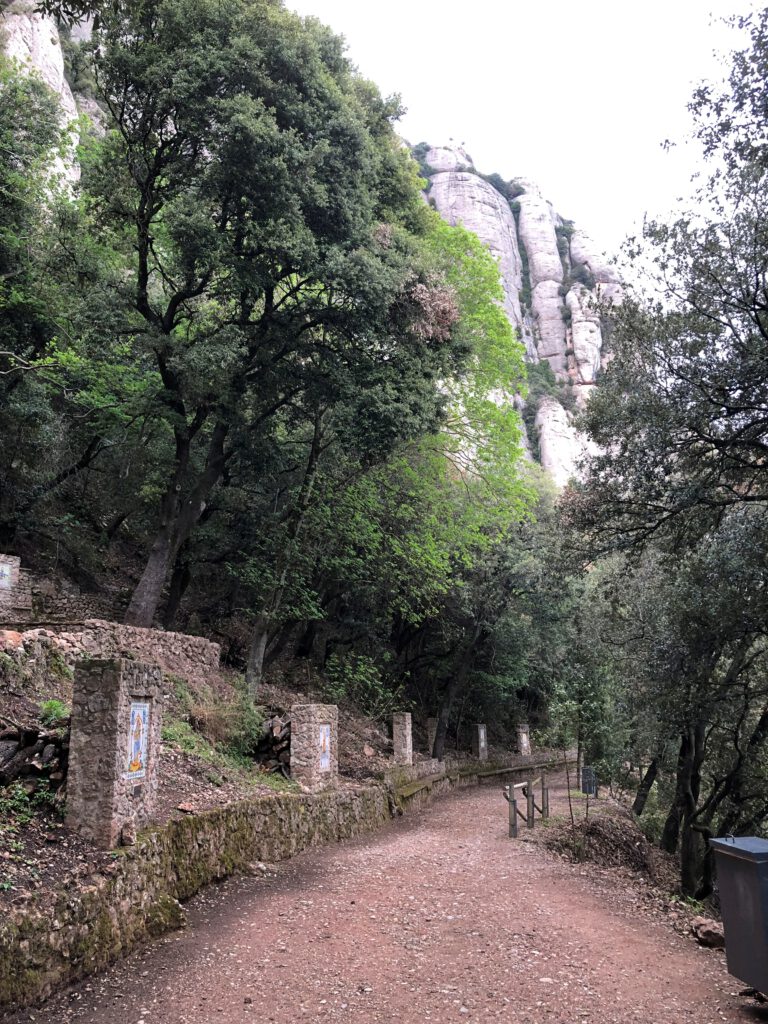
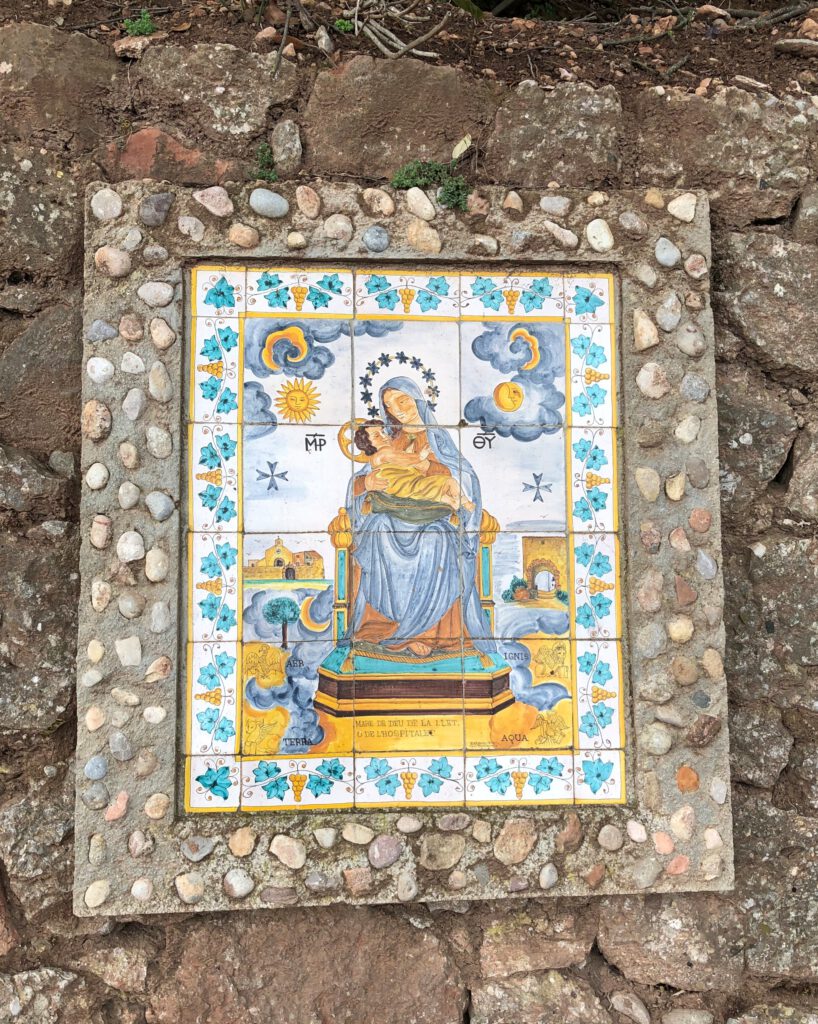
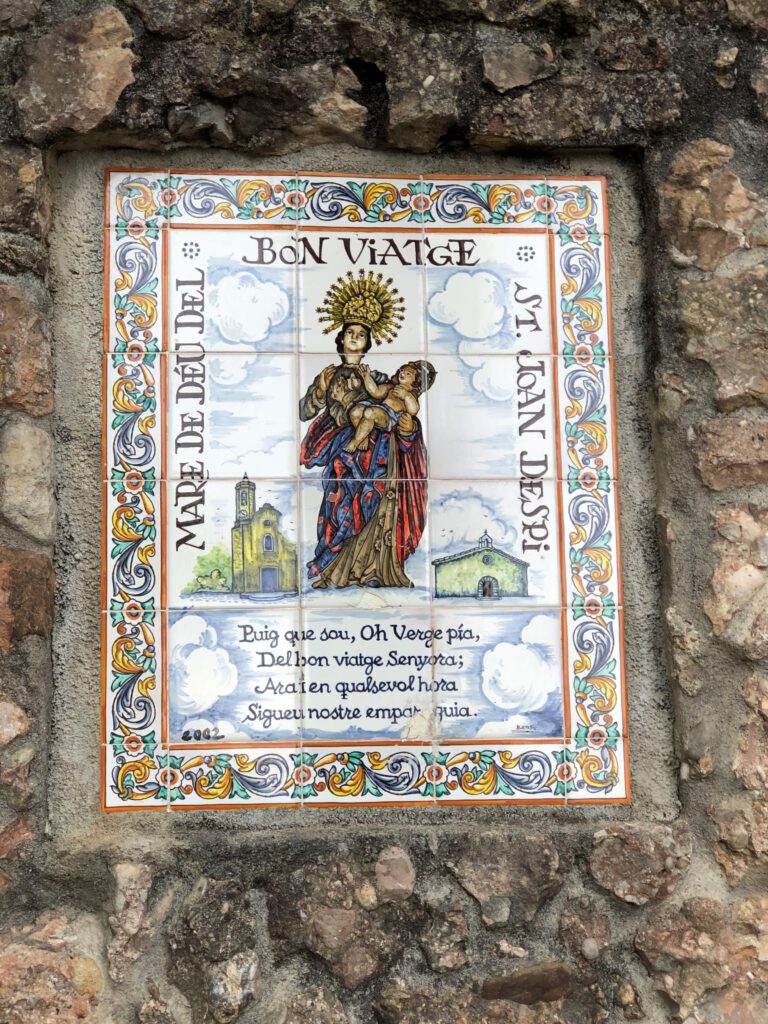
I wandered out to the Camí dels Degotalls, the path lined with tiled depictions of Madonnas from all over Spain. Dozens of them, each unique, each a vision of mother and child. I’d never seen so many representations of life and tenderness in one place. It was all about the archetypal motherly presence, silent, assuring care.
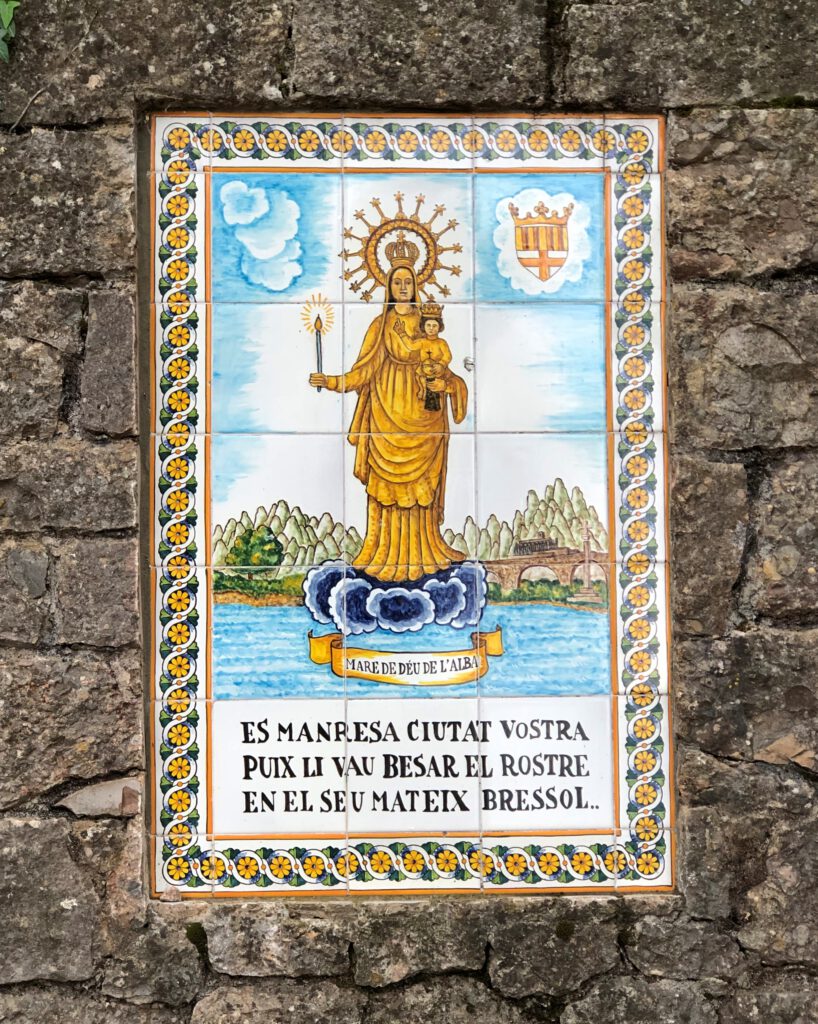
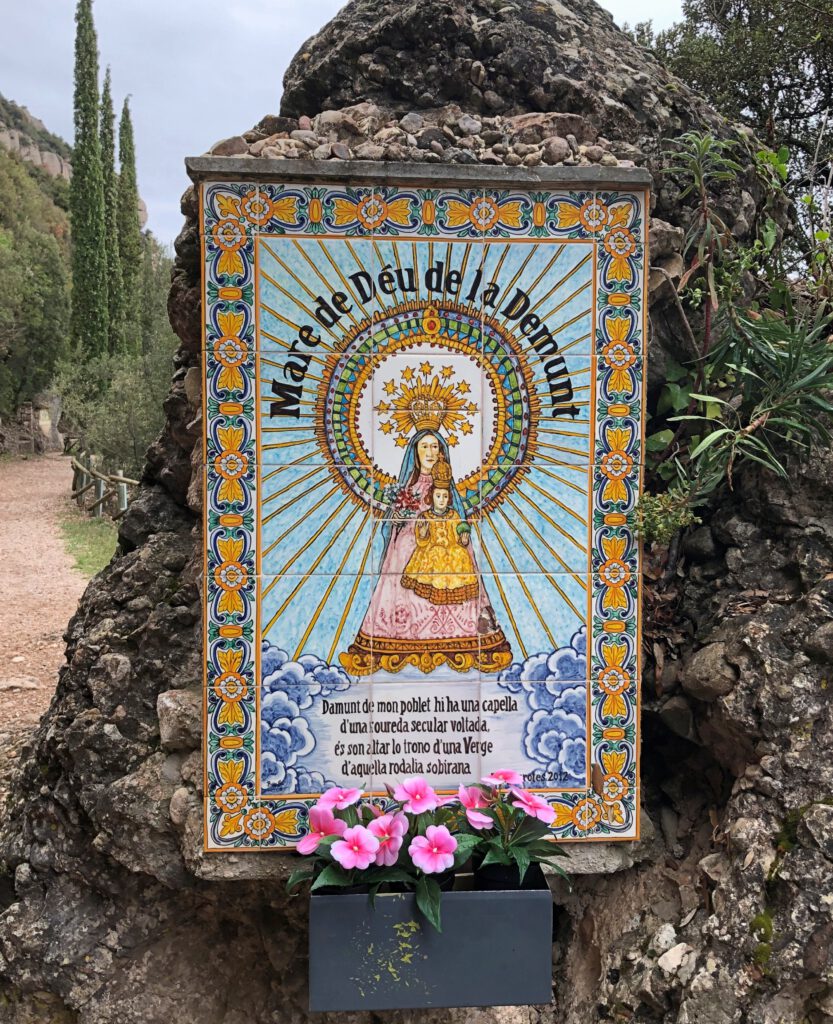
Montserrat felt like a portal to something older and kinder than doctrine. But my forgetfulness remained. I had come here to lay a foundation for a new direction, but instead I felt unmoored—a brain in a vat, floating without anchor, disconnected from my body, from my purpose, from my own thoughts. I needed to fix this. Before I forgot why I came at all.
Chapter 12
Suddenly, as I made my way to the abundant Montserrat buffet that day, a thought struck me: I could probably use the latest recordings from the “LifeLog” app on my phone. I paused abruptly, standing in the middle of the path and inadvertently disturbing the flow of other pedestrians.
I opened the app, having some trouble with the screen in the sun, and typed:
What day is it? I know I’m in Montserrat, but what else? Did I have plans? What should I do if I want clarity?
The app processed for a moment, then its calm, synthetic voice replied:
According to your calendar and recorded conversations, it is Tuesday, May 16th. You are currently in Montserrat, Catalonia, Spain. Your immediate plans include completing your “vacation” by Thursday, May 18th. On that day, you are scheduled to return to Paris. The app detects several past references to your Atelje in danger.
An appointment with Dr. Eva Rossi is scheduled for tomorrow, May 17th, at 9:00 AM in Barcelona. Urgency is indicated regarding a recent phone call.
This app recommends maintaining calm and proceeding with flow. External situations may resolve, but the nature of the eternal remains elusive. Turn inward—toward creativity. Art has saved many; it may save you. Note: creativity without work may result in eternal wandering (or unemployment, if financial stability is a concern).
What makes you feel better it is to use your talent. Without that you have a tendency for a downward spiral from which you may have a hard time to get out.
The app also detects prolonged anxiety and erratic sleep patterns. While no clinical sleep disorder is recorded, current performance levels are lower, not higher.
The app paused. Then a red warning flashed across the screen:
WARNING: Consult a neuro-linguistic professional. Continued use may result in serious memory impairment.
I shut it off, a cold shiver running through me. Maybe it was time to stop taking machines so seriously.
I walked towards the buffet, trying to shake off the app’s words, but they stuck. Maybe I really shouldn’t take this robot so seriously. It wasn’t my mum anyway.
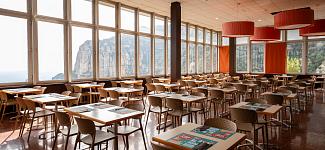
The hall was noisy, full of light and the clatter of plates. Large windows offered panoramic views of the surrounding mountains, the jagged peaks bathed in the warm light of the afternoon sun. I joined the queue, feeling strangely detached from the scene, as if I were watching a movie rather than participating in real life.
When I reached the counter, a lady with a warm smile and a twinkle in her eye attended to me. She began in rapid Catalan, then switched to French.
“Bonjour ! La paella est excellente aujourd’hui. Et la fideuà aussi—c’est comme la paella, mais avec des nouilles. Vous prendrez quoi ?”
She didn’t know I was French; she’d only heard me speak Spanish to her. Funny how things unfold. I suddenly wanted to tell this strange what had happened, but I shut up. At any point that person would be more inclined to understand my situation than the strange girl I’ve rescued from the plaza.
“Et vous savez,” she added, leaning in, “la bière et le vin sont inclus ! Petit secret…”
I smiled, accepting a glass of red wine. Maybe a little looseness was what I needed. Maybe clarity wouldn’t come from control, but from letting go. The day had started uncertainly, but every tunnel has an end—if you can see the light. I just had to remember what I was looking for.
What I realized, after half a glass of red wine and three generous pieces of that excellent white fish we call cabillaud in French (I never bothered to learn the Spanish word… Bacalao? Perhaps… Sometimes, the unexpectedly blue eyes of my Asturian father, who now lives in Valencia, seem to look into my third eye, whispering words in his archaic language that I’m barely sure of) … The game was part of the game.
All that happens, the annoying ladies and the sweet ladies, the occasionally gallant or indifferent gentlemen or the same people morphing from one category into another — a weird play of mirrors in a kaleidoscope — was the very life I was living, all the while I was wondering how to organize it and make it more understandable for my mind.
The wine didn’t magically make me more apt at planning, but now, at least, the diagnoses and patronizing suggestions from that app had been successfully flushed away and dissolved into a warm, relaxed inner state. At least I remembered one thing: I had to see Eva tomorrow, after I checked out of Hostal Abat.
Then I decided to go see La Moreneta again. Maybe she would have more consistent suggestions for my condition than the stupid app. She’d been listening much longer than the internet has existed. And what’s more, she knew what silence was. Silence does not exist on the internet.
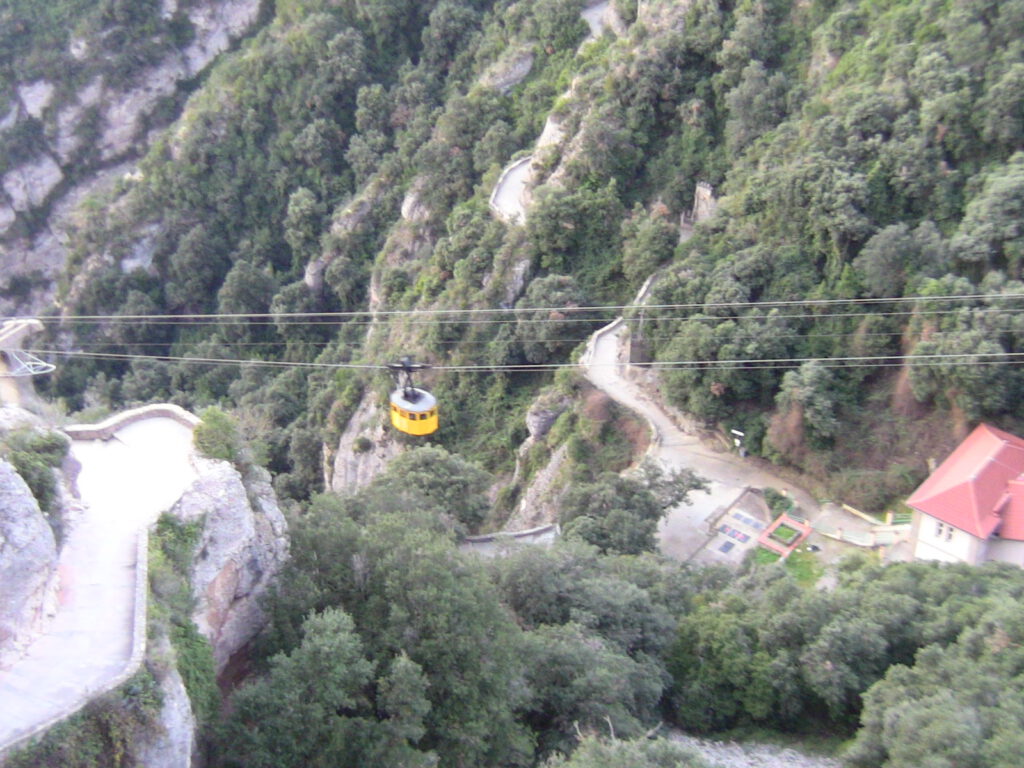
Chapter 13
Yes. She was perfectly silent. So silent that I became silent, too. I sat in the chapel behind her back for a long time. I wasn’t exactly moved—just calm. Clear. The buzz of the wine had faded from my blood, and the psychic residue of that girl, Valerie, seemed to have lifted too. Or so I thought.
But then something nagged at me. That listening device she carried—said she needed it for work and travel. What kind of work? I’d been vaguely aware that anyone’s conversations could be recorded and analyzed. I hadn’t cared enough to hide anything. But I also hadn’t said anything worth hearing.
I left the chapel, passing the long rows of burning candles. These weren’t like ordinary church candles—each was a quarter meter long, thick as my wrist, and burned all day in bold colors: deep green, blood red, warm gold. The light they cast was alive, dramatic. I stopped at the gallery. It had started to rain.
I called Mateo.
“Your girlfriend came to see me last night.”
“What girlfriend?” He sounded perplexed or if I caught him with something I shouldn’t have known.
“Valerie.”
“I don’t know any Valerie.”
“Maybe she lied about her name. She’s… intense. Said you told her I was here.”
“I didn’t tell anyone.”
Silence hung between us, thin and sharp. Now I had a problem. Someone was spying on me. They knew I was here. They sent her. But why?
I told him the whole story—how she’d talked her way in, slept in my kitchen, drained the air from the room.
“No sé, chica…” was all he said. I could almost see him shrugging. He didn’t want more problems. Not with the landlord circling, not with his body aching from restoration work, not with his mind tired from trying to outrun the person he used to be.
The person he used to be. I remembered the stories he’d pieced together for me, fragments of a life so utterly different from our bohemian Paris existence. Mateo, at 26, toiling on an assembly line in a meat factory in some remote town in Aragon. The sterile cold, the repetitive motions, the brutal efficiency of it all. It was a stark image that sometimes still flashed in my mind – the artist I knew now, with his careful hands and quiet intensity, once processing an endless line of embutidos, dreaming of something else.
His father, a former Ford employee from Barcelona, had pulled up roots after Mateo’s mother died, fleeing the city for a piece of land in Aragon with his two children. A quiet, grieving exodus. Mateo spoke of those years as a kind of wilderness, both beautiful and suffocating. His escape then wasn’t art, not yet. It was the mountains. I pictured him on weekends, scaling sheer rock faces with friends, the wind whipping through his hair, the only sound the crunch of his boots and the distant, echoing anthems of Héroes del Silencio blasting through his headphones. “Hanging from a rope,” he’d once said, describing the feeling, not just of the climb, but of that whole period – suspended, precarious, searching for something firm to grasp. It was in those wild, high places that he truly felt alive, a stark contrast to the small, cold world of the factory floor.
Coming to Paris, to our ateljé, had been his definitive leap, his final climb away from that Aragon past. This studio wasn’t just a place to work; it was the solid ground he’d found after years of hanging. It was where he could finally stop outrunning that younger self, that restless, introverted boy from the meat factory who sought solace in rock and distorted guitars. Now, with the pressures threatening to dismantle everything we’d built, I could hear the echo of that old weariness in his voice. He wasn’t just tired from the present fight; he was tired of the ghost of that Aragon boy, always threatening to pull him back into a life he’d fought so hard to leave behind.
Chapter 14
That evening, I wandered behind the small plaza, past the back of the monastery, and followed a curling path alongside a stream rushing down from the mountain. It fed into an artificial pool above the square where the grocery and hostel stood. The path crossed the water again and again. I jumped from rock to rock, pushing branches aside. I felt, more than thought, that I was exactly where I needed to be.
In Paris, the city felt like it was sanding down my health and spirit. I wanted to return to something raw—to wander mountains, cross streams, breathe air that hadn’t passed through a million lungs. Yet here, in Montserrat, I couldn’t force a sense of belonging either. I didn’t truly belong anywhere I knew. I worked from Paris. I passed through. I didn’t root.
By that stream, it occurred to me: no matter where I went, I’d be facing the same two currents—the outer conditions of the world, what you might call the market of existence, and the inner conditioning of my own history, the people who’d marked me. The inner stuff felt softer, more malleable. I could easily imagine redesigning my human environment—curating who I let near me, starting with very few, letting the rest tend their own gardens.
But beneath that was a deeper layer. I needed a personal quantum tune-up. A shift in frequency. Until now, rather than weaving harmony into my days, I’d been moving through life like a boat dragging its anchor—wasting motion, burning energy, going nowhere with purpose. It was like heating a home in winter while leaving all the windows open. Warmth poured out; cold seeped in.
Energy-draining habits had to go. But the tricky part was this: simply moving through society—getting places, making things happen—all of it could be draining. What changed was how I met it.
That’s where the experiment came in. Without realizing it, I’d shed layers of defeatist thinking—the kind that eats energy like a parasite. Linear thought consumes focus the way running burns breath. Now my thinking wasn’t linear. It was trickier to navigate, harder to draw clear plans from, but it didn’t drain me. It left me with a quiet sense of unfolding—not progress you could measure, but something alive and moving.
And for that, I was grateful to whoever had tinkered with my mind. Munich, Zurich—it didn’t matter. The gift was the shift.
Chapter 15
Again, just so suddenly, a call. Mateo’s voice, usually so grounded, was thin with tension.
“They started a court case. The landlord. He’s pushing for eviction. And it’s moving fast. Too fast.”
“Already?” A cold knot tightened low in my stomach. I knew the landlord was aggressive, but this felt like a targeted strike.
“Something’s not right,” Mateo said, lowering his voice. “The judge—his name is Knud. Scandinavian. And the landlord, you know he’s Scandinavian too. The case jumped the queue. Normally you wait months. This took several days.”
I stayed quiet, listening. Mateo wasn’t one for conspiracy theories. But he knew systems, he knew how things usually worked. And this wasn’t usual.
“You still have that AI thing? The deep search one? Can you look? See if they’re connected somewhere—companies, boards, anything.”
“I can look,” I said. “But even if I find something, what then? It doesn’t stop the case.”
“Just look,” he said. “Please.”
I opened DeepSeek Private Detective—a subscription-based AI tool that trawls business registries, corporate filings, and public organizational databases. It maps links people would rather keep quiet: shared directorships, joint ventures, old school ties hidden under layers of legal structure.
I created a new case and entered the names and positions that Mateo texted me. Then I set the search depth to comprehensive—not just surface registries, but archived records, international databases, even mentions in press releases or industry reports.
A relationship map unfolded on screen.
They weren’t just from the same country.
They sat on the advisory board of the same obscure Nordic-French cultural exchange foundation—a tax-efficient shell that mostly funded business networking events between Scandinavian investors and Parisian real estate players.
There it was. Not a smoking gun, but a thread—a clear, professional overlap. They moved in the same circles. They knew each other.
I screenshotted the relationship diagram, the list of shared events, the foundation’s stated purpose—fostering commercial and judicial cooperation.
Then I called Mateo back.
“I found something. They’re both on the board of a Nordic-French business foundation. It’s not illegal. But it’s a connection.”
Mateo was silent for a beat. “So they know each other.”
“They know each other.”
“Can we use it?”
“We can try.”
I looked out at the darkening mountains. The tools were there. The links were real. But proving bias? That was another game entirely. One I wasn’t sure I wanted to play. But now—at least—we knew.
Chapter 16
I sat at the small desk in my cell, the glow of my phone the only light. I needed to make this clear—for Mateo, for the solicitor, for myself. The landlord’s claim was a house of cards; we just had to point out where the wind was blowing.
After a bit of internet search, I began typing, my thoughts sharpening as I wrote:
“The core of our defense rests on three points:
1. The landlord’s claim of ‘urgent need’ to access our bathroom for a ventilation control panel is fabricated. The old panel was already there under the previous owner, with no access issues. He is installing a new unit not out of necessity, but as a pretext.
2. Even if access were required, proper protocol was not followed. He should have provided written notice via certified mail—not attempted informal entry or used intimidation.
3. The location of the new panel is his responsibility, not ours. According to manufacturer guidelines, it should be installed in an unobstructed area like a basement or attic—not within a leased apartment where access conflicts with tenant rights.
His actions suggest intentional pressure, not necessity. This isn’t about ventilation—it’s about forcing us out.”
I read it over. It was clean. Logical. Something a solicitor could work with.
I attached the screenshot from the Exhausto website and the relationship map between the landlord and the judge. Then I sent it to Mateo.
A few minutes later, his reply came:
“Go sleep. You’re not thinking straight, I can tell. You get what this means, but your ideas are too scattered for any solicitor. I’ll see what I can do tomorrow. Maybe we need someone who can phrase things properly—since you clearly can’t right now.
Are you okay? You used to be good with words, I remember…”
I put the phone down.
He was right. I was exhausted. But the structure was there. The bones of the argument were solid—even if my delivery was rough.
Tomorrow, Eva. Then back to Paris.
Chapter 17
I remembered that I had to check out the next morning, but I was puzzled when the alarm rang at 7, reminding me of “Eva Rossi.” I vaguely recalled she was the lady from the business card, but I completely forgot what I wanted from the appointment. Anyway, I gathered my stuff from the shelves, checked out of Las Celdas, and headed to the plaza for a coffee. No time to say a proper goodbye to La Moreneta. “See you later, maybe,” I thought.
I boarded the Cremallera (*rack railway) and tuned into my podcast, a curated mix of life hacks from ancient history to the present. Today’s episode was on Richard Bartlett, a last-century chiropractor who habitually knocked people unconscious in his workshops. They’d allegedly heal and change their lives by briefly accessing a “non-ordinary reality.” I believe I did access it more than a couple of times when performing something virtually unbelievable. Could I just avoid eviction from the ateljé by accessing the non-ordinary reality? The ordinary reality is narrow and concrete; the non-ordinary realities are vast and vague, and they should be even easier to navigate, I thought.
Lost in thought, I changed transports and found myself in Diagonal Mar, where Eva Rossi awaited me. Upon seeing me, her expression shifted, becoming very serious and unusually silent. She seemed to recognize me from somewhere, but I couldn’t place her face at all.
“I found your card in my pocket,” I said, “and I have Blue Star Insurance, which I believe covers this visit.”
“Of course. How are you feeling today?”
“Fine, maybe a bit dizzy at times,” I admitted. “Can you just check if there’s anything… well, ‘wrong’ with me?”
“We’ll follow the standard procedure first, and then I’d like to talk with you more specifically”
She led me to a comfortable room with a small tablet and a keyboard where I had to answer a hundred seemingly random questions of all sorts. What I typed was immediately visible to her on her monitor, but she seemed busy with another patient. Sometimes I hit the microphone button and simply spoke my answers to the machine, which transcribed my words in neat text boxes. I carefully avoided any mention of the Chronos Frame experiment. What I didn´t knew for sure, was to what extended did she know about my experiment. So better watch out.
When I finished, a secretary met me and asked me to take some refreshments in the hall while waiting for my turn. I opted for another café au lait and a cookie.
Soon, Eva called me in. She was a small, ageless woman with sharp Italian features and bright, sly eyes, as if she was about to tell a dirty joke. She looked intelligent.
“How have you felt since the experiment?” she asked.
I was taken aback. So the card was from that day.
“May I know what happened instead?” I deflected.
“I was not present. But I received your picture and a video. I was told they gave you my details. You were unconscious for a while, came to, and decided to move to another hotel. Someone from their team drove you to be safe.”
It was obvious that this was the version she really got. But I was not sure at all that it was true. Anyway, she was here to check me, and that she could do. I told her about the peculiar feelings and experiences I had had since the experiment: my altered perception, memory gaps, the fleeting flashes of insight, followed by fog, and the profound disconnect between my thoughts and my ability to articulate them linearly, all summing up to rather significant shifts in my sense of reality.
She didn’t use any equipment but asked if I could return the next day to the second floor for some scans. I told her I probably could, as I was staying in Barcelona—a friend had asked me to accompany her to a Merengue night at the beach.
Hearing this, Eva’s eyes glinted with a sly, knowing look. Puzzled, I said, “See you tomorrow,” and went out for lunch.
Chapter 18
I found a simple chiringuito on the beach, a tent with plastic chairs and a view of the sea. I ordered an ensalada con mariscos and, from a stack of forgotten reading material under the counter, picked up a faded pamphlet. It held a curious story, surely fictional, set in a time when intentions held weight and magic lingered in the corners of daily life.
It told of two women. One, named Simone, daughter of the town governor, coveted the small plot of land belonging to her neighbor, a woman referred to only as Blanca. They were not enemies; they shared a cold, wordless indifference. Blanca remained unaware of Simone’s hidden designs until the day a notice appeared on her porch, demanding she cede her dwelling to the town council.
Sensing the shadow of her neighbor’s intention behind this legal claim, Blanca sought counsel from an old woman versed in the old ways. The woman spoke not of spells, but of will. “That which you seek to cast over another must spring first from your own heart,” she said. She advised Blanca to fill her home with light, to burn sandalwood to purify the air, to visualize a protective aura around her dwelling, and to offer kindness where she could, letting her actions radiate a quiet, steady good.
Blanca did this, certain her positive focus was her shield. Yet the resolution, when it came, had nothing to do with her actions. Simone, in a sudden and private upheaval, left her husband. Her father, the governor, chose that moment to retire from his post, and the two left the town quietly together. Blanca was left in peace, her home secure – apparently not by magic but simply by some random unraveling of other lives. She, however, attributed her good fortune entirely to her practice and continued it faithfully.
I pondered the story for a long time, watching the waves break in the distance. The warm sand shifted under my feet. I sipped my Davida melocotón juice, a sweet, peachy nectar you only find in Spain, its exquisite taste a testament to what humans can create when they treat nature’s gifts with respect. Davidavidavida… The name itself seemed to chant the eternal cycle of vida—life. A strange resonance hummed between my own situation and Blanca’s. It wasn’t about magic; it was about focus, integrity, and the quiet, often indirect, ways the universe balances itself.
My phone buzzed. A message from Victoria. We’d met at a salsa night on my last visit. Tonight, she proposed merengue. Merengue… which could slip into the rhythmic pulse of forró, and sometimes, if you were lucky, into the brief, intoxicating heat of a lambada—a dance that left a mark long after the music faded. I hoped they’d play it. I liked Victoria’s taste in music. I needed movement that required no thought, only rhythm.
I had time to kill between lunch and a swim. I paid the bill and decided to take a stroll along the Paseo Marítimo, now filling with a new wave of tourists, their voices blending with the sound of the sea. The story of Blanca and Simone stayed with me, a quiet reminder that not all battles are won by direct confrontation. Sometimes, you simply have to tend your own light and wait for the tide to turn.
Chapter 19
I met Victoria at a small, dimly lit bar a few blocks from the beach. The air was thick with the smell of salt and fried fish. She was already there, sipping a glass of white wine.
“So, merengue,” I said, settling onto a stool. “I have to confess, my knowledge of Brazilian dances is… theoretical.”
She laughed. “Merengue isn’t Brazilian, it’s Dominican. But tonight’s party is a mix. They’ll play some forró, maybe some carimbó… it’s all connected. The rhythms travel, get mixed up.” She took a sip of her wine. “It’s like stories. They change who tells them.”
I asked her to explain, and she launched into a whirlwind tour of rhythms—the pulsing beat of carimbó from the Amazon, the accordion-driven melancholy of forró, the elegant, dreamish maxixe that scandalized Brazilian high society. “And then there’s lambada,” she said, her eyes lighting up. “The ‘forbidden dance’. But the real story is even wilder.”
She leaned in. “The song everyone knows as ‘Lambada’? The one by Kaoma? It was a rip-off. They took a Bolivian song, ‘Llorando se fue’ by Los Kjarkas, and just… sped it up. The original writers only got a fraction of the millions it made. Maybe a million, after a long fight, for a song that made over forty-five million worldwide. It was stolen. The dance became a global sensation, but its heart was taken from someone else.”
It felt like a parable. Something original and heartfelt, repackaged en gold and sold worldwide… en fin… both could have value, and the unknown band might have been happy with their million.
It was time to go. The party was in a converted warehouse by the sea, its doors open to the warm night. We heard the music from a block away—a driving, insistent beat. And there, at the entrance, talking intently with a tall man, was Eva Rossi.
“Well, that’s my neurologist,” I said to Victoria, my voice dry.
Victoria raised an eyebrow. “Interesting place for a doctor’s appointment.”
We paid and went in. The air was electric, a crush of bodies moving in the dim light. Victoria was swept away almost immediately by a friend. I stood at the edge, feeling the rhythm in my chest but unable to translate it to my feet.
A man with a kind smile asked me to dance. I followed him, trying to mimic his steps, but my movements were stiff, out of sync. I was thinking too much. I was all frame and no flow. He was patient, but I felt like a clumsy impostor.
Then a hand touched my arm. It was Eva.
“My turn,” she said, her voice cutting through the music. She dismissed the man with a nod and took my hands.
Her way of dancing was absolutely shameless. She pressed close, intertwining her legs with mine, guiding us down toward the floor in a deep, fluid quebrada, then spinning out and back in, her hips swaying in a hypnotic, undulating rhythm. It wasn’t just a dance; it was a statement. A sexy, confident, unapologetic show. I stopped thinking and just followed her lead, my body finally unlocking, finding the pulse it had been searching for.
After a few minutes, she leaned in, her breath hot against my ear. “You are AMAZING! You DO have the rhythm!”
I laughed, breathless. “Yeah, I guess the guy I danced with before didn’t.”
“Many of them here don’t,” she said, scanning the crowd with a critical eye. “They just wave their arms around, thinking they’re great.”
But as suddenly as the energy had come, it left me. The crowd, the noise, the press of bodies—it all became too much. The whole thing felt sharp, too intense. I needed air.
“Thank you,” I said to Eva, extracting myself, and made my way out of the throbbing warehouse and headed toward Bacardi Apartments, the familiar place in Plaza Real. But when I arrived, the heavy wooden door was locked. The lights were off. A hand-written sign was taped to the glass: CERRADO POR REFORMAS.
Closed for renovations.
I stood there on the cobblestones, puzzled. The city, which had felt so familiar hours before, suddenly felt unknown again. I pulled out my phone, the screen glowing in the dark street, and began searching for a place to sleep.
Chapter 20
I found a place at once, tucked into a narrow passageway just off the Liceu metro station, a short walk up La Rambla. It was a decent pensión, neat and tidy, well within my means. But as I approached, a wave of recollection washed over me.
These new troubles with the landlord were an ugly tether, pulling my thoughts back to Paris. It was an old pattern. Each time the city had worn me down—when the manners of its people, the relentless grind, the entire spectrum of its modern life felt oppressive and hollow; when even the artistic circles seemed shallow, their ambitions either petty or senselessly extravagant—just as I sought an escape, Paris would extend an olive branch. A flirtation, a promising collaboration, a chance encounter. It was the city’s way of asking for another chance.
This time, its strategy was different. It was reminding me, with painful clarity, of the value of our atelje. For years, it had been my sanctuary and my center of gravity—the heart of my work, my emotional world, my connections. It was where I found rest, where we shared meals, where I slept.
I knew Mateo would guard it fiercely. He had tried to live without it once. He’d moved to a smart apartment with a view of Notre Dame, and after the fire, he joined a team of restorers, mostly foreigners who could be hired for less. The work required a master’s skill, which Mateo possessed, but the employers banked on their recruits valuing the cathedral’s name on their CVs more than a fair wage. After six months, the cathedral was restored, but Mateo was broken, his arms aching from the constant, elevated work. He terminated his lease, filled our old Skoda with his life, and drove to Madrid to an older woman who offered him a room and the chance for a shared journey of personal growth.
It ended with his savings gone—a case of growth matched by degrowth—as he languished without the vital stimuli Paris had provided. He found himself back on factory, regressing to a life he believed he’d outgrown. When I pulled him from that despair, he was grateful. Now, he was the anchor to reality, while I drifted through experiments with perception.
But here, in this new bed, I was simply grateful for the day. Life was still beautiful, and forever new.
Chapter 21
I was floating in the liminal space between sleep and waking when the words formed, not as a thought, but as a declaration spoken in the unmistakable timbre of my own inner voice:
STRUGGLE IS CREATED BY THE SENSE OF STRUGGLE.
The effect was instantaneous. I was fully, sharply awake, the sentence ringing in the silence of the room. I lay still, testing its weight against the architecture of my life. And I saw it with devastating clarity: yes, I was the author of my own conflicts. I had a long-standing habit of translating every challenge into a battlefield, meeting obstacles with a flinch of anxiety or a surge of defensive anger. It was my pattern with studies, with lovers, with collaborative projects, with any figure of authority. My history was a chronicle of self-inflicted wars. This deep-seated reflex demanded recalibration, now more than ever.
Rising, I took stock of my surroundings. The hostel was quiet and genuinely cosy. A check confirmed the shower was both clean and powerful. My destination was the communal kitchen, a well-appointed space that promised a semblance of morning ritual. As I opened my backpack, my hands found a pack of hard cheese and crispbread. And with the discovery came the memory: this, too, was a function of intention. The night before, guided by a subconscious, long-held principle to always secure the basics, my hand had autonomously retrieved these items from a mini-mercado shelf. The same quiet force had guided my steps directly to this hostel when I needed immediate shelter. The mechanism was consistent, reliable in its small-scale magic.
This principle of intention had always been a subtle undercurrent in my life. Faced with an impossible task, the simple internal statement—“I am sure there is a way”—would inevitably clear a path. A memory surfaced in vivid detail: a child had forced an apple into a goat’s mouth, lodging it beyond the animal’s ability to chew. Three of us, complete novices, stood baffled for five minutes. I remember closing my eyes for a second, not in prayer, but in a firm, silent setting of intention. The solution unfolded wordlessly: one person brandished a twig before the goat’s nose, another steadied the animal’s head, and as it twitched its muzzle away, I hooked the apple free with a finger. It was a perfectly coordinated act, choreographed by an invisible director.
As I brewed coffee—the kitchen was a testament to communal trust, offering a choice of Turkish pots, a French press, a filter machine, and a shared fridge of milk—I wondered if this force had operated on a grander scale all along. My successes had always been precisely calibrated to the ambitions I permitted myself. I never intended for wealth or societal significance; my focus was my art and my intimate circle. Yet, my needs were always met, often at the eleventh hour, as if the universe respected my focus but enjoyed a touch of drama.
A new question crystallized. What if the resolution of the legal quagmire in Paris—a victory or, better yet, its graceful dissolution—depended not on legal stratagems, but on the quality of my INTENTION? Our current predicament, I realized, was the direct result of a void of intention. I had been aware of the predatory new landlord, yet I had chosen a policy of laissez-faire, a passive hope that the problem would ignore me if I ignored it. It was a strategy that had failed spectacularly.
Now, seated in a sun-dappled courtyard with my simple breakfast, surrounded by the quiet camaraderie of strangers, any struggle felt like a fiction. The air was mild. The world was peaceful. It seemed almost ludicrous to believe that somewhere, a man in an office was actively plotting to dismantle a piece of my existence. The sense of struggle had been my own creation, and in this moment of clarity, I chose to lay it down.
Chapter 22
The breakfast settled in me like a quiet promise. The sense of clarity held, and I felt a new resolve as I gathered my things and made my way to Eva Rossi’s clinic in Diagonal Mar. A faint trepidation flickered at the thought of seeing her after the charged encounter at the merengue night, but the appointment, as it turned out, was on another floor—a sterile, quiet wing dedicated to diagnostics.
I spoke only to a technician, a young man with a gentle demeanor who guided me through the process. The machine hummed around my head, a rhythmic knocking that felt like it was mapping the echoes inside my skull. When it was over, he studied the images with a clinical eye. “They look a bit unusual,” he remarked, not with concern, but with professional curiosity. “But nothing I would flag as pathological.” He scheduled a phone consultation for me later that afternoon to discuss the results with Dr. Rossi.
With hours ahead, I drifted out into the neighborhood. Diagonal Mar was a study in modern Barcelona—wide, sun-bleached avenues, sleek glass towers, and the sprawling shopping center that loomed like a monument to consumption. I walked without direction, past families heading to the beach and tourists navigating with phones in hand, feeling like a ghost between their vibrant, purposeful lives. I found a bench overlooking a manicured park and simply sat, watching the palm fronds stir in the breeze, waiting for the call.
When my phone rang, right on time, it was Eva herself.
“Hello, Denni,” she said, her voice calm and familiar in my ear. She used the name without hesitation, the name I had given on a whim. How did she know? I had registered for the symposium with it, a thin layer of disguise. But I didn’t ask. The air felt too still for questions.
“Your motor and cognitive performance last night showed absolutely fine neural functions,” she began, getting straight to the point. “But your scans show some tendencies which are… surprising.”
She proceeded to explain, her tone that of a scientist describing a fascinating specimen. She told me my brain showed development in certain regions—the prefrontal cortex, the insula—consistent with long-term meditators, individuals who cultivate intense focus and present-moment awareness. But then she noted a peculiar dissociation. I exhibited high intellectual empathy—the cognitive ability to understand what others were thinking and feeling—alongside a notable lack of affective empathy, the visceral, emotional resonance with those states.
“You can map another person’s emotional landscape,” she said, “but you don’t necessarily feel the weather there yourself.”
The description landed with a quiet thud of recognition. It fit. I could understand a person’s pain, analyze its roots and its consequences, but the compassionate impulse to soothe it, to share its weight, felt distant, like a signal from a far-off star. Was this always the case? A recent development? A direct result of the experiment? I couldn’t pinpoint its origin, only its truth.
“There’s no need for concern,” Eva continued, her voice shifting to something almost reassuring. “This isn’t a pathology. It’s a configuration. And it seems stable. I’m happy for you that your health worries were not confirmed.”
She ended by stating that the experiment’s insurance would cover all consultations and scans without further scrutiny. Then she added, almost as an afterthought, “And even the fact that you used a pseudonym is not a problem from our side.”
The line went quiet. I sat on the bench, the phone still pressed to my ear. The sun was warm on my skin, the sounds of the city a gentle hum. The diagnosis, if it could be called that, felt less like a verdict and more like a key—a precise, clinical explanation for the hollow space I had sometimes felt where a more passionate connection should be. I was not broken. I was wired differently. And someone, it seemed, had known who I was all along.
After a considerable pause, Eva told me she would be glad if I wanted to attend her forró workshops in the summer. I told her I had to be back in Paris, that work was waiting.
Then, unexpectedly, the invitation left my lips. “If you are ever in Paris,” I found myself saying, “pass by our studio. You could teach my partner to dance.” I thought, hm, Mateo will surely find her formidable personality a refreshing challenge.
“Just look up ‘Denimateca Art Studio’ on the maps,” I added.
She gave a light, knowing laugh. “Sure, I’m writing this down. I’ll give you a call.”
I hung up, the city sounds returning to focus. I thought about how seamless her professionalism was—how she had assessed my neurological state not in a sterile room, but in the middle of a dance, and how her work and her play seemed to be part of the same vibrant frequency. If all professionals were like that, life wouldn’t be sliced into separate compartments, but would flow as one integrated whole.
As for the scan results, the question wasn’t about being wired differently. The only question that lingered was one of change. Had the experiment reshaped these pathways, or had it simply revealed what was always there, like a scanner bringing a hidden image to light? There was no worry in the thought, only a quiet curiosity. The landscape of my mind was what it was. The real work was learning to navigate it.
Chapter 23
Okay, so I’d had my little Spanish spiritual retreat, complete with a neurologist who doubled as a dance instructor and a brain that was apparently now as calm as a monk’s, if that monk also had the emotional warmth of a GPS. Time to go home. I headed to the Barcelona-Sants station, boarded the high-speed train to Paris, and promptly ignored the gorgeous blur of the French countryside. I had work to do.
For the next six-ish hours, I hunched over my laptop, wrestling with text for our current project—something about translating the energy of urban decay into wearable art, which sounded way more pretentious than it was. It was basically taking cool scraps of garbage and making it look expensive. By the time the train pulled into Gare de Lyon, my back was stiff, my eyes were crossed, and I was buzzing with that weird mix of exhaustion and caffeine that passes for productivity.
A taxi later, I was fumbling with the heavy lock on the atelje door. I pushed it open and was met with… silence. Mateo wasn’t home. The studio was exactly as we’d left it, a beautiful, chaotic mess. Canvases leaned against walls, half-finished sculptures watched me with their blank, wire-frame eyes, and bolts of fabric spilled out of boxes like colorful intestines. It smelled of turpentine, old wood, and us. It was perfect.
And then, standing there in the middle of it all, something just… clicked.
It was the stupidest, most obvious thought in the world, but it landed with the force of a revelation: We already have it.
We didn’t need to defend this place. We just needed to be in it. The whole idea of a battle was what was giving the landlord his power. He was banking on fear—the fear that makes you panic, that makes you lash out, that makes you start scheming and cheating just to counter their scheming and cheating. It’s how you take a bad situation and turn it into a complete disaster.
I thought about those Chinese philosophy concepts I’d always liked but never really lived—wu wei and ziran. Wu wei isn’t about doing nothing; it’s about not forcing things. It’s the action of no forced action. And ziran is that state of being spontaneous and authentic, just letting things be what they are. Trying to out-manipulate a manipulator? That was the opposite of that. It was exhausting, unnatural effort.
Our job wasn’t to fight. Our job was to be so unshakably, authentically here that his nonsense just… bounced off. What we needed was a straight, simple course. “Defending” just meant hiring a solicitor to be a professional buffer, to handle the legal noise so we didn’t have to. That was it. That was the minimal, necessary action.
The real work, the only work that actually mattered, was to speed up. To stop worrying about the landlord and start making the art our customers were waiting for. To build our lives in a way that was meaningful to us. To create so hard and live so fully in this space that it became an unassailable fact.
If we did that—if we just focused on our own flow—then all the other stuff, the landlord and his petty games, would eventually just… fall into their proper, insignificant place.